Showing posts sorted by relevance for query sheep breed. Sort by date Show all posts

Wednesday, December 22, 2010

Sheep Breed: Swaledale

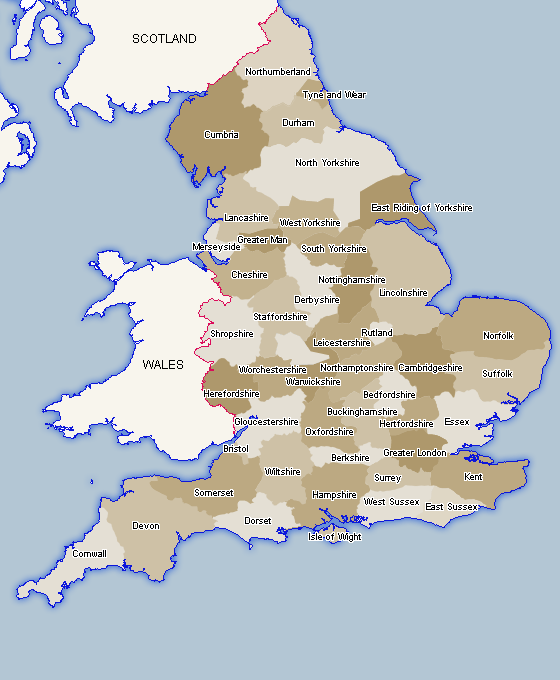
Swaledale sheep are named for the Yorkshire valley of Swaledale. They live in the mountainous areas of Great Britain, focused predominantly in County Durham, Yorkshire, and the lower fells of Cumbria. The Swaledale has proved itself to be a bold, able-bodied, and hardy sheep breed. These sheep are of medium build with black faces (sometimes speckled with white), and both males and females grow curled horns. They are well-fitted to endure the hardships of exposed and high-lying situations. Swaledale ewes are excellent lamb rearers. Their off-white coats are thick, straight, and coarse and they produce wool that is durable in wear and of even texture. Being excellent feeders and of strong constitution, as mutton producers they are second to none.

Wednesday, December 23, 2009

Sheep Breed: Shropshire


This delightfully well-mannered sheep originated in the counties of Shropshire and Staffordshire in western England. Many believe they developed from the crossbreeding of Southdowns, Leicesters, Cotswolds, and Longmynds, but whatever the case, the breed came to be known as Shropshire in 1848, and was officially recognized as such by the Royal Agricultural Society in 1859. Understandably enthused English Shropshire breeders congregated in 1882 to found the Shropshire Sheep Breeders' Association and Flock Book Society. It proved to be a landmark gathering, for it was the world's first formal sheep society. It remains active today, publishing a newsletter, Shrop Talk, as well as its annual Flock Book under the watchful eye of its president, Les Newman.

Today's Shropshire is a dual-purpose (meat and wool) breed, and as such enjoys popularity in many parts of the world, including England and the United States. They are resilient, able to withstand a variety of climates and pasture in assorted terrain. The unimpressed look on their faces lets you know there's little they haven't seen, though the resignation in their eyes dampens your spirit.

Wednesday, December 7, 2011

Sheep Breed: Romney

Formerly named "Romney Marsh" sheep, and sometimes called the "Kent", the long-wool breed popularly known as Romney originated in southeast England and was established by 1800. The breed thrives on several continents, but is particularly abundant in New Zealand, where both its wool and meat are chief exports. Romneys are remarkably versatile and adaptable, in part due to their ability to stave off foot rot and liver fluke. Romneys also produce a heavy fleece that maintains through winter; a healthy, mature ram can yield upwards of 10 kg per year. Because their wool has a high average fiber diameter (AFD), it tends to be very strong and can thus be used in making rugs and carpets. Their long, lustrous fleeces are also sought by hand-spinners.

Tuesday, February 16, 2010

Sheep Breed: Lonk

The Lonk is one of the most majestic creatures on Earth. Native to the Yorkshire and Lancashire Pennines, these robust sheep have no problem handling rugged terrain, namely rocky hills and peat bogs. One of the largest sheep breeds, the Lonk is primarily used for the production of meat and carpet wool. The oldest flock dates back to 1740, and it was farmed by monks at the Whalley and Sawley Abbey. The flock book was established in 1907. Today the Lonk Sheep Breeders Association is headquartered in Burnley, Lancashire.

Thursday, June 3, 2010

Sheep Breed: Dartmoor

The Dartmoor is native to the West Country, in particular Devon; consequently, it is a robust animal that can withstand the harsh winters around the moors. Snowdrifts are no problem for this hardy beast.

Tending to be medium-sized, short-legged, and hornless, the Greyface Dartmoor, a Lustre and Longwool sheep, will typically yield a clip of 7-15 kg. The legs and head tend to be well-wooled and the white face will be mottled with black and gray. The wool is used in the production of tweeds, blankets, woolen cloths, and carpets.